

In the highly competitive world of sock manufacturing, choosing the right sock knitting machine is a decision that can significantly impact the success of your business. With a diverse range of machines available in the market, each boasting unique features and capabilities, it's essential to have a clear understanding of your specific needs and priorities. This article aims to guide you through the process of selecting the best sock knitting machine for your requirements, covering aspects such as production capacity, technical specifications, automation features, cost, and more.
- Understanding Your Production Requirements
- Key Technical Specifications to Consider
- Automation and Control Features
- Build Quality and Durability
- Cost and Return on Investment
- Future-Proofing Your Investment
1. Understanding Your Production Requirements
Before delving into the details of different sock knitting machines, it's crucial to assess your production needs. Consider the types of socks you plan to manufacture, such as sports socks, casual socks, dress socks, or specialized medical or compression socks. Different sock styles often require specific machine capabilities. For instance, sports socks typically demand high elasticity and durability, necessitating a machine that can handle elastic yarns effectively and has a robust knitting structure. On the other hand, delicate dress socks call for a machine with finer needle counts and precise control over the knitting process to achieve a smooth and elegant finish.
Production volume is another key factor. Are you a small-scale producer catering to local markets or a large enterprise aiming to supply to national or international distributors? High-volume production may require faster machines with multiple knitting heads or automatic feeding systems to minimize downtime and increase output. Conversely, a small-scale operation might benefit from a more compact and cost-effective machine that can still produce high-quality socks at a reasonable pace.
2. Key Technical Specifications to Consider
Needle Count and Gauge: The needle count refers to the number of needles in the machine's cylinder, while the gauge indicates the distance between the needles. A higher needle count generally allows for finer and more intricate knitting, enabling the creation of detailed patterns and a smoother texture. For example, a machine with a 200-needle count can produce socks with more delicate designs compared to one with 100 needles. The gauge also plays a vital role in determining the thickness and appearance of the sock. A smaller gauge is suitable for thinner and more delicate socks, while a larger gauge is better for thicker and more robust ones.
Yarn Feeding System: A reliable yarn feeding system is essential for consistent sock production. Look for machines with multiple yarn feeders if you plan to use different colors or types of yarns simultaneously. Automatic yarn feeding systems ensure a steady supply of yarn, reducing the risk of yarn breaks and improving production efficiency. Some advanced machines also feature yarn tension control, which helps maintain uniform knitting tension throughout the sock, resulting in a more consistent product quality.
Knitting Patterns and Stitches: The ability to create a wide variety of knitting patterns and stitches is a significant advantage. Modern sock knitting machines come with programmable controls that allow you to produce complex patterns such as jacquard, ribbing, lace, and more. Ensure that the machine you choose has a sufficient range of built-in patterns and the flexibility to create custom designs to meet your product requirements. This versatility will enable you to offer a diverse range of sock styles to your customers.
Speed and Efficiency: The speed of the sock knitting machine directly impacts your production capacity. Faster machines can produce more socks in a given time, but they may also require more maintenance and careful operation. Consider the machine's maximum knitting speed and its ability to maintain consistent quality at high speeds. Additionally, look for features like automatic stitch adjustment and quick changeover between different sock styles to further enhance efficiency.
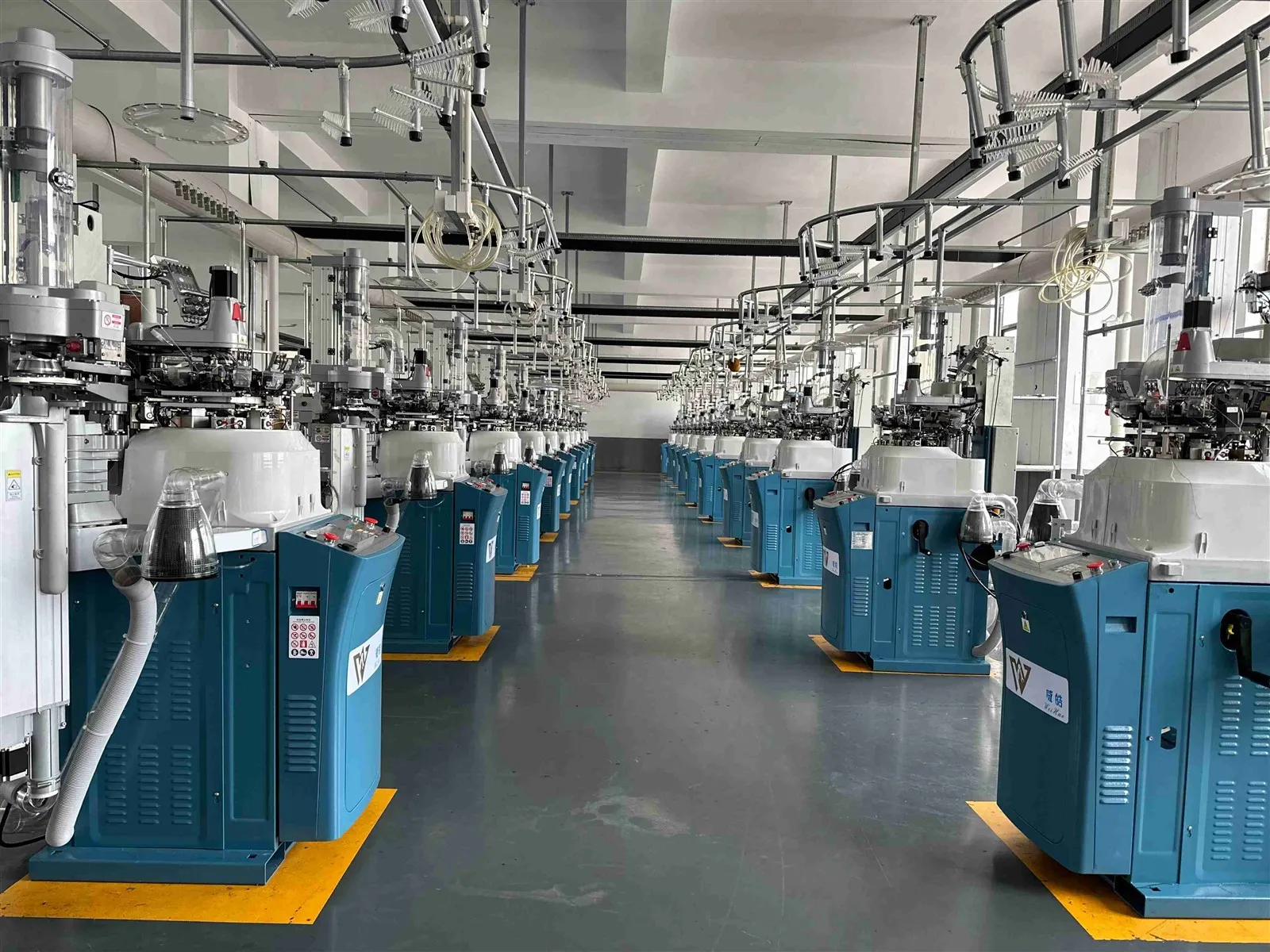

3. Automation and Control Features
Automation Levels: Automation features can greatly simplify the sock production process and reduce labor costs. Machines with higher automation levels may include functions such as automatic yarn changing, automatic needle selection, and automatic defect detection. Automatic yarn changing systems save time and reduce errors when producing multi-colored socks, while automatic defect detection can identify issues like broken needles or yarn breaks early, preventing the production of defective socks and minimizing waste.
Computerized Controls: Computerized control systems offer greater precision and flexibility in knitting. They allow you to program and store different knitting patterns, adjust parameters easily, and monitor the production process in real-time. Some advanced control systems even provide remote monitoring capabilities, enabling you to manage your machines from a central location or even remotely. This feature is particularly useful for large-scale operations or businesses with multiple production facilities.
User Interface: A user-friendly interface is crucial for ease of operation. Look for machines with intuitive controls and clear displays that make it easy for operators to set up and run the machine. A good user interface should also provide access to important information such as production statistics, machine status, and error messages. This will help minimize training time and ensure that your operators can work efficiently with the machine.
4. Build Quality and Durability
Materials and Construction: The quality of the materials used in the construction of the sock knitting machine is a key factor in its durability. Machines made from high-quality metals and components are more likely to withstand the rigors of continuous use and last longer. Check the quality of the cylinder, needles, gears, and other critical parts to ensure they are built to last. A well-constructed machine will not only reduce the risk of breakdowns but also maintain consistent performance over time.
Brand Reputation and Support: Choosing a machine from a reputable brand with a proven track record in the industry is essential. A well-established brand is more likely to provide reliable customer support, including technical assistance, spare parts availability, and training. Read reviews and testimonials from other users to get an idea of the brand's reputation for quality and service. Additionally, consider the brand's history of innovation and its ability to keep up with the latest technological advancements in the sock knitting industry.
Maintenance Requirements: Consider the machine's maintenance requirements and the ease of servicing. Machines that require frequent maintenance or are difficult to service can result in increased downtime and higher operating costs. Look for machines with accessible components and clear maintenance instructions to make the servicing process as straightforward as possible. Some machines also come with self-diagnostic features that can help identify potential issues before they become major problems, allowing for proactive maintenance and reducing the risk of unexpected breakdowns.
5. Cost and Return on Investment
Purchase Price: The purchase price of the sock knitting machine is an important consideration, but it should not be the sole determining factor. Compare the prices of different machines while also taking into account their features, capabilities, and quality. Sometimes, investing in a slightly more expensive machine with better features and durability can result in long-term cost savings. Consider the total cost of ownership, including factors such as maintenance, energy consumption, and potential upgrades, when evaluating the price of a machine.
Operating Costs: In addition to the purchase price, consider the machine's operating costs, including energy consumption, yarn waste, and maintenance expenses. Energy-efficient machines can help reduce your production costs over time. Also, look for machines that minimize yarn waste through features like accurate yarn feeding and tension control. Regular maintenance is essential to keep the machine running smoothly and prevent costly breakdowns. Factor in the cost of spare parts and the availability of technical support when assessing the operating costs of a machine.
Return on Investment (ROI): Calculate the potential return on investment by estimating the machine's production capacity, the selling price of your socks, and the associated costs. A machine that can produce high-quality socks efficiently and at a lower cost will generally have a faster ROI. Consider factors such as market demand, competition, and your production volume when evaluating the ROI.
6. Future-Proofing Your Investment
Scalability: Choose a sock knitting machine that offers the potential for scalability. As your business grows, you may need to increase your production capacity or expand your product range. A machine that can be easily upgraded or expanded with additional features or components will allow you to adapt to changing market demands without having to invest in a new machine. Consider factors such as the availability of spare parts, the compatibility of the machine with future upgrades, and the manufacturer's support for expansion when evaluating the scalability of a machine.
Technological Advancements: Keep an eye on technological advancements in the sock knitting industry. Newer machines may offer improved features, higher efficiency, and better quality control. Consider choosing a machine that is compatible with future upgrades or can integrate with emerging technologies such as automation, artificial intelligence, and the Internet of Things (IoT) to stay competitive in the long run. Investing in a machine with the potential to adapt to new technologies will ensure that your business remains at the forefront of the industry.


