

Socks are one of the most common garments in the world, and are widely used for their comfort, fashion and sports functions. From traditional hand-knitting to modern fully automatic sock machines, technological advances have greatly improved production efficiency, making the manufacture of socks fast and precise.
Content
1. The Sock Knitting Machine: An Overview
2. Factors That Influence the Knitting Time
3. The Knitting Process: Step-by-Step Breakdown
4. Time Frame for Knitting Different Types of Socks
5. Efficiency and Production Rate
6. Automation and Innovation in the Sock Industry
7. Challenges in Sock Production
1. The Sock Knitting Machine: An Overview
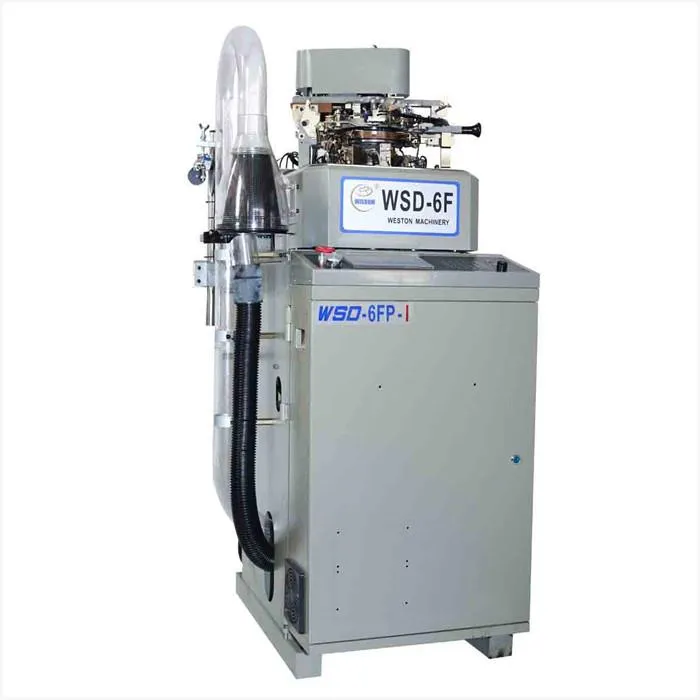
The sock knitting machine is a specialized device designed to automate the production of socks. These machines have evolved significantly over the years, from simple hand-powered models to the sophisticated, high-speed models used in today's textile industry. These machines are designed to knit various types of socks, including athletic socks, dress socks, and casual wear.
Sock knitting machines can be broadly divided into two types: circular knitting machines and flat knitting machines. Circular knitting machines are the most commonly used for sock production due to their high efficiency. They create socks in one continuous process, knitting in a round pattern that requires minimal post-processing.
2. Factors That Influence the Knitting Time
Several factors contribute to the amount of time it takes to knit socks on a machine. These factors include:
- Machine speed: Different models of sock machines have different operating speeds. It depends on the specific machine to determine how many socks it can produce. Different machines have very different hourly production volumes.
- Sock Complexity: The complexity of the sock design also affects the time required to knit. Simple ribbed socks will take less time than more intricate designs that include patterns, colors, and textures. Machines can be programmed to change patterns on the fly, but each design adjustment can slow down the process.
- Size and Type of Sock: Larger socks, such as those designed for heavy-duty work or larger feet, will naturally take longer to knit compared to smaller socks. Additionally, socks designed for specialized uses like compression socks or knee-highs may require more time for added features like extra elasticity or longer lengths.
- Material Used: The type of yarn or thread used also impacts knitting time. Softer, finer yarns may take longer to knit due to their delicate nature, while thicker, coarser threads might be processed faster.
- Machine Maintenance: Machines need regular maintenance to ensure smooth operation. A well-maintained machine runs faster and more efficiently than one that is overdue for repairs or adjustments. Downtime for maintenance or repairs can significantly increase production time.


3. The Knitting Process: Step-by-Step Breakdown
The process of knitting socks on a machine involves several key stages, each of which contributes to the overall time it takes to create the finished product.
- Threading the Machine: This is the first and most crucial step. The machine must be threaded with the appropriate yarn, which is typically done by operators. This process can take anywhere from 10 minutes to 30 minutes, depending on the machine and the sock design.
- Knitting the Sock: Once the machine is properly set up, the knitting process begins. The machine operates using multiple needles arranged in a circular pattern. These needles weave the yarn into the fabric, forming the sock in one continuous loop. For a basic sock, this can take as little as 10 to 20 minutes on a high-speed machine. However, more intricate patterns, heel shapes, or color changes can extend the knitting time.
- Finishing: Once the sock is knit, it may require finishing steps such as toe closing, heel shaping, and trimming. Some socks also require elasticization to ensure a snug fit. These additional steps can take anywhere from a few minutes to several minutes per sock.
4. Time Frame for Knitting Different Types of Socks
The knitting time of socks is jointly affected by materials, styles, patterns and needle counts: in terms of materials, ordinary cotton yarn does not require special debugging and takes a basic amount of time; high-elastic nylon (compression socks) or blended functional yarn (sports socks) require additional tension calibration, which adds 1-2 minutes; inlaid materials such as silicone anti-slip strips are superimposed according to length (about 10 seconds per centimeter). In terms of style, every increase of 10cm in length (such as knee-high socks are 60% longer than mid-tube socks) requires 1-2 minutes more; every increase in functional design (such as sole cushioning, arch tightening) adds 1-2 minutes due to yarn switching and density adjustment. Pattern complexity is the key variable. Two-color stripes only add 5-8 minutes, and full-page jacquard or three or more color matching can add 10-15 minutes due to frequent yarn changes (5-10 seconds for calibration each time the color is changed) and programmed control of the knitting needles. In terms of needle count (density), fine stitches (high needle count) have 30%-50% more rows of needles than regular ones, and the corresponding time increases by 20%-40%.
5. Efficiency and Production Rate

The main advantage of sock knitting machines is their efficiency. A single skilled operator can control 15 machines, which greatly increases productivity. Modern sock knitting factories have many sock manufacturing machines. Each machine can produce up to 20 pairs of socks per hour, and hundreds of pairs of socks per day, even if the styles are complex or the production volume is large.
For example, a factory with many high-speed knitting machines can easily produce 5,000 to 10,000 pairs of socks per day, depending on the configuration of the machines and the complexity of the styles.
6. Automation and Innovation in the Sock Industry
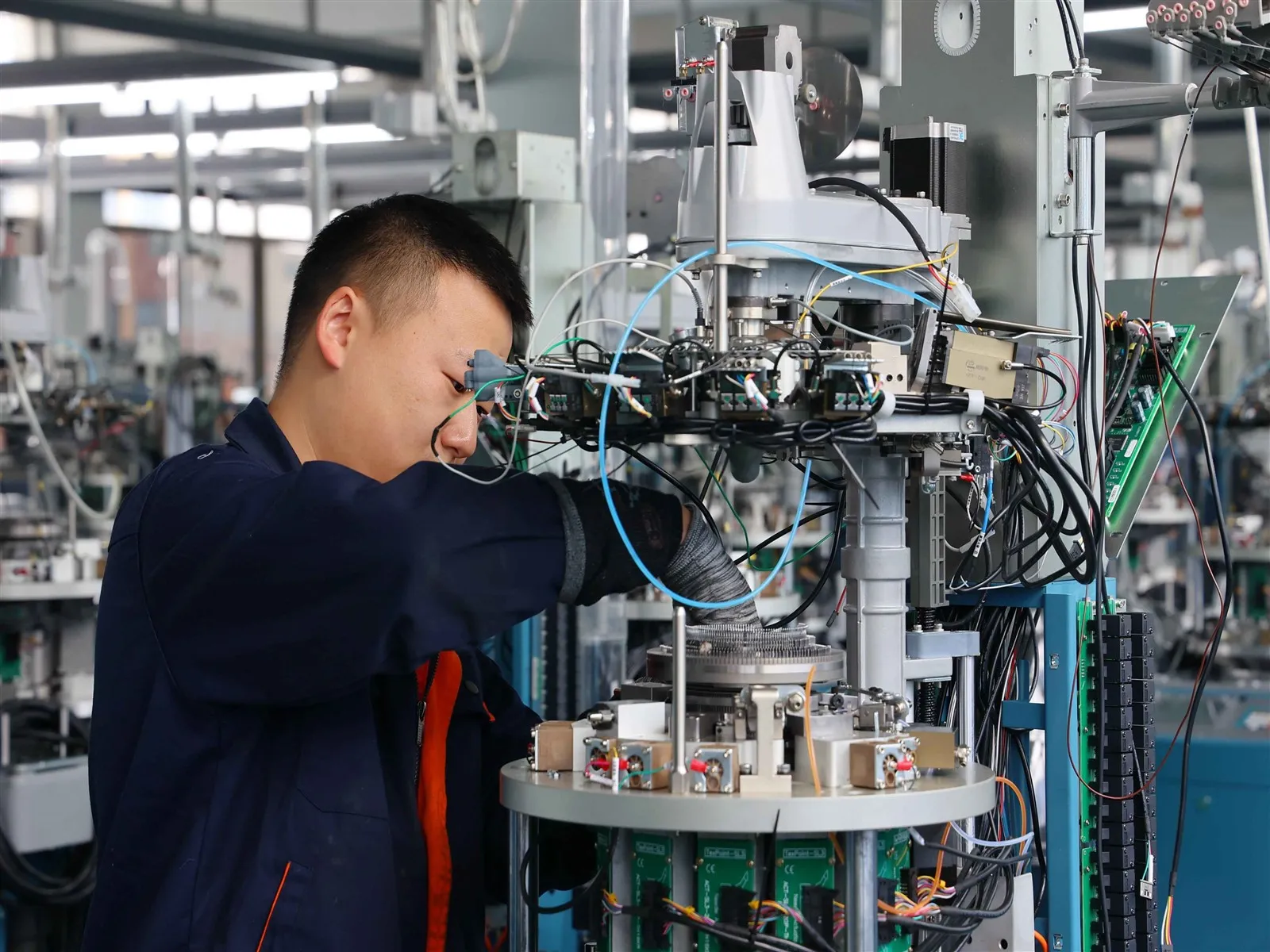
As technology advances, sock knitting machines have become more automated. This has reduced human intervention and increased production speed. Additionally, the integration of Computerized Numerical Control (CNC) systems allows manufacturers to precisely control every aspect of the knitting process, from tension to stitch length to pattern changes.
Some of the most advanced sock knitting machines also come equipped with automatic yarn changers and seamless knitting capabilities, reducing the time needed to adjust the machine during production. These innovations enable the production of high-quality socks with minimal waste and quicker turnaround times.
7. Challenges in Sock Production
While sock knitting machines have made the process faster and more efficient, there are still challenges in maintaining quality control. The speed of production can sometimes lead to inconsistencies in the finished product, especially in mass-production environments. Manufacturers must carefully monitor machines to ensure that every sock meets the required standards for quality, fit, and finish.
Additionally, the high cost of purchasing and maintaining industrial knitting machines can be a barrier for smaller manufacturers. However, as technology continues to improve, these machines are becoming more affordable and accessible.
8. Conclusion
The time it takes to knit a sock by machine depends on a variety of factors, including the type of sock, the speed of the machine, the complexity of the design, and the materials used. While basic socks can be produced in just 2 to 3 minutes, more complex socks, such as patterned socks or compression socks, may take a bit longer. Despite these differences, sock knitting machines have significantly reduced the time and labor required to produce socks, allowing manufacturers to produce high-quality socks in large quantities.
All in all, sock knitting machines have revolutionized the industry by significantly improving efficiency, making it possible to produce socks with a wide variety of designs and features at high speed and on a large scale.


